
Why Schools Need Digital Management Systems in 2026
In 2026, running a school without a digital management system is like running a bank without software, which can be possible but inefficient.
Across Kenya, schools are growing. Student populations are increasing. Parent expectations are higher. Curriculum demands are evolving, from CBC to IGCSE and beyond. Yet many institutions still manage attendance in paper registers, prepare report cards manually, and reconcile school fees using spreadsheets.
The truth remains, manual systems are no longer sustainable for modern schools. Digital transformation is no longer optional; it is essential.
The Reality Facing Schools Today
To be honest, School administrators are overwhelmed. Teachers are stretched thin.
Principals are balancing academic performance, discipline, finances, and stakeholder communication, all at once.
Some of the most common challenges schools face today include:
- Manual attendance tracking
- Delayed academic report generation
- Disorganized financial records
- Parent communication gaps
- Difficulty managing multiple campuses
- Data duplication and loss
In 2026, these inefficiencies are not just inconvenient but also costly. They cost time, money and reputation.
Why Digital Management Systems Are No Longer a Luxury
A digital school management system centralizes operations into one secure, accessible platform. Instead of scattered systems and paperwork, everything lives in one place.
Here is why digital management systems matter more than ever:
1. Efficiency in Daily Operations
From scheduling to communication, digital systems streamline daily administrative work.
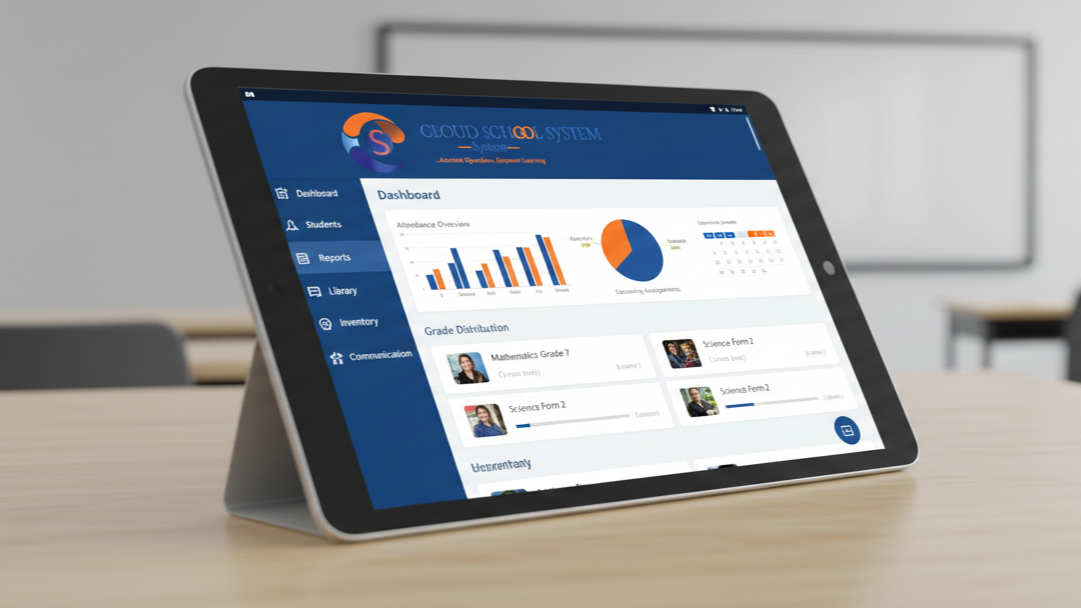
Cloud School System, for example, uses a single dashboard to help schools manage tasks, coordinate stakeholders, and simplify workflows. With this digital system, the organisation is likely to experience fewer errors, faster processes and less stress.
2. Smarter Financial Management
One of the biggest pain points for schools is fee collection and financial tracking.
Cloud School System integrates directly with:
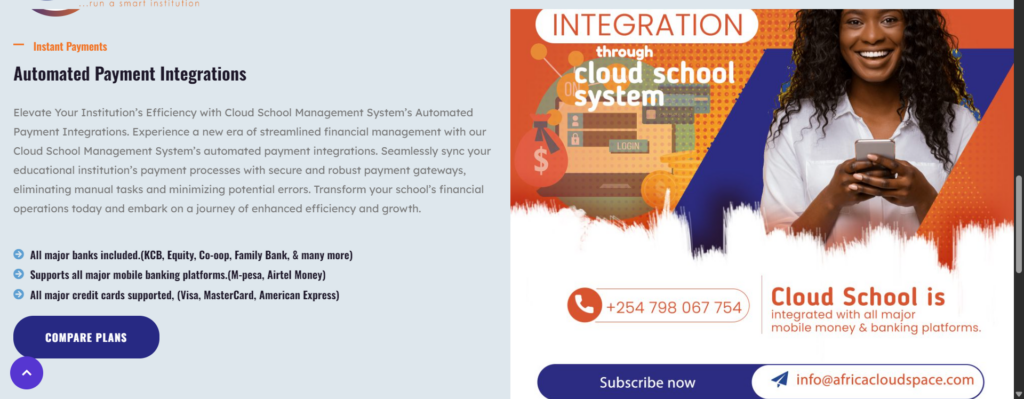
- M-Pesa
- KCB
- Co-operative Bank
- Equity Bank
Through automated payment integration, schools can:
- Generate invoices automatically
- Issue digital receipts
- Track balances in real time
- Reduce reconciliation errors
In a country where mobile money dominates transactions, this level of automation is no longer optional but necessary.
3. Academic Performance Tracking in Real Time
A digital school management system is created with the issues that teachers are facing in mind. The systems ensure that teachers take the shortest time possible, preparing and organising themselves and focus on what really matters; Teaching. Teachers enter assignments and grades once, and the system automatically generates:
- Consolidated report cards
- Student transcripts
- Performance trends
- Academic analytics
No duplication.
No manual compilation.
No last-minute panic before report day.
For CBC, IGCSE, 8-4-4, and ACE curriculum schools, this level of flexibility ensures that academic data aligns with curriculum requirements.
4. Access Anytime, Anywhere
Modern school leaders are not confined to the office.
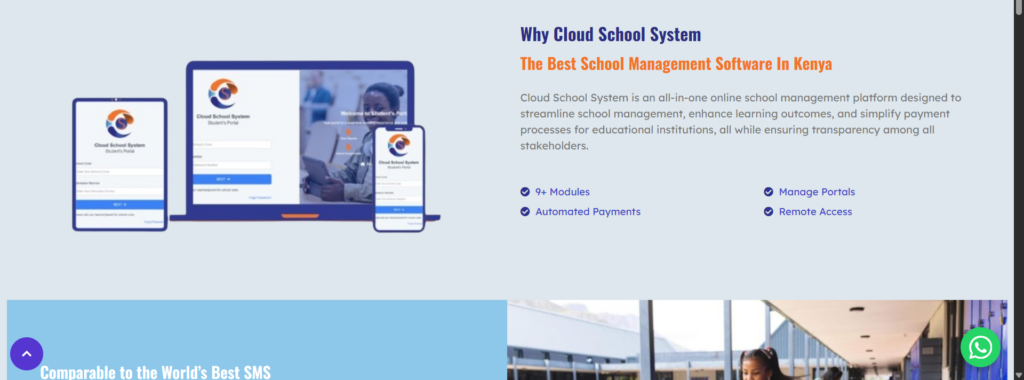
With Cloud School System’s cloud-based architecture, schools can access their system from:
- School offices
- Home
- Remote branches
- Any internet-enabled device
There is no need for expensive hardware or on-premise servers. Everything is securely hosted with unlimited cloud storage.
In 2026, mobility equals control.
5. Dedicated Portals for Every Stakeholder
Education is not just about students. It involves parents, teachers, administrators, and leadership.
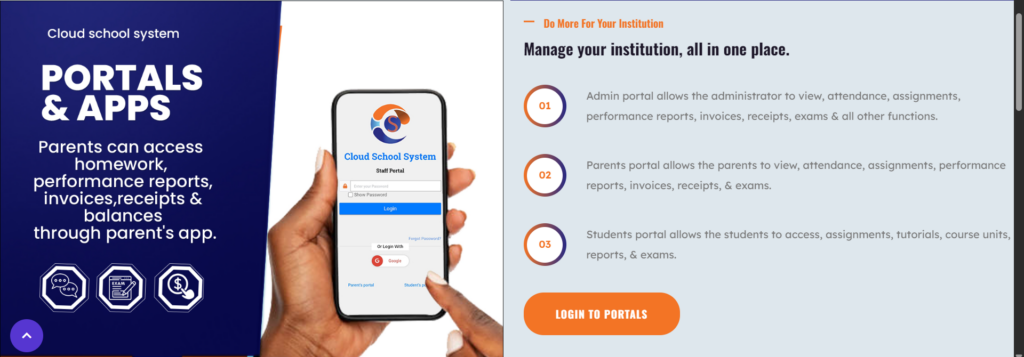
Cloud School provides:
- Parents Portal – View homework, performance, invoices, receipts
- Students Portal – Access academic progress
- Staff Portal – Manage tasks and reports
When communication becomes transparent, trust increases.
And in today’s competitive education sector, trust is everything.
Digital Transformation Is Already Happening
This is not a theory. Everyone is embracing digital transformation, and your school cannot be left behind.
Cloud School System currently supports:
- 500+ schools
- 80,000+ students
- 7,000+ teachers
- 1,000+ administrators
Institutions such as:

- Brookshine School
- De Paul Catholic School (Kamulu)
- Kiota School
- Garden Brook Academy
- Leerand Academy
have already embraced digital transformation and have so many positive things to say about cloud School System.
The question is no longer whether schools should digitize.
The question is: How soon can they start?
The Competitive Advantage in 2026
Parents today compare schools not just by facilities, but by:
- Responsiveness
- Transparency
- Technology integration
- Communication speed
Schools using modern ERP systems position themselves as forward-thinking, organized, and reliable.
In a competitive education market, that advantage matters.
The Bottom Line
In 2026, schools need digital management systems because:
- Administrative complexity has increased
- Financial accountability is critical
- Curriculum demands require data accuracy
- Stakeholder expectations are higher
- Competition is stronger
A comprehensive ERP solution like Cloud School System provides:
✔ Administration & Communication tools
✔ Accounts & Finance automation
✔ Academic performance tracking
✔ Multi-curriculum support (CBC, IGCSE, 8-4-4, ACE)
✔ Multi-campus management
✔ 24/7 support
Digital transformation is not about replacing people but about empowering them.
Ready to Modernize Your School?
If your school is still relying on manual systems or disconnected tools, 2026 is the year to rethink your strategy.
Cloud School System is designed specifically for Kenyan educational institutions. It focuses on scalability, customisation, and is built for real school challenges.
Book a Demo Today
Experience how digital transformation can simplify, strengthen, and future-proof your school. Talk to us via [email protected] or call +254798067754 to book a demo and kickstart your journey to digital transformation with Cloud School System.